
Austin Rewards the Decisive. So Does Arizona.
For Austin residents who have built something exceptional and are ready to add a second address that matches it — Scottsdale and Paradise Valley are waiting.
There is a recognizable profile among Austin’s most successful residents. They arrived with a plan — or made one quickly after arriving — and they executed it. The wealth they have built is the result of clarity and timing: in technology, in venture capital, in real estate, in energy. They are not people who wait to see how things develop. They are people who read the landscape early and act.
The luxury second home decision, for a buyer like this, follows the same logic. The question is not whether to own in Arizona. The question is whether you have looked carefully enough at what Arizona’s finest communities actually offer — and whether you have moved before the property you would have chosen is already gone.
Scottsdale and Paradise Valley represent something Austin’s luxury market is still in the process of building: residential communities with decades of curated character, private clubs whose membership rosters reflect genuine selectivity, and a social season that has been shaped over many years into something that draws the same caliber of resident, winter after winter. This is not a market that is becoming something. It is already it.
For the Austin buyer who spends summers watching the heat settle in over the Hill Country, Arizona offers the other side of the calendar — October through April, outdoors every morning, with the kind of sky overhead that makes the desert feel like its own reward.
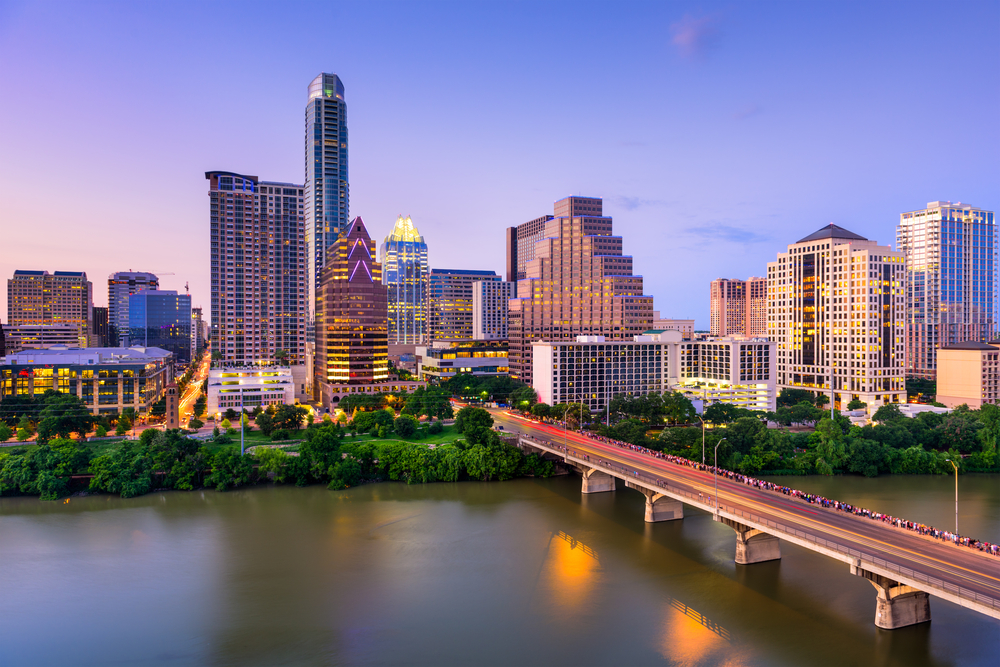
Why It Resonates for Austin Residents

The Outdoor Life
Austin residents are outdoor people when the calendar cooperates — and they know, better than most, exactly when it stops cooperating. From roughly June through September, heat and humidity push life indoors and trim the outdoor season to its edges. The mornings are survivable; the afternoons are not. Golf, hiking, cycling — all of it retreats.
Arizona’s outdoor season runs counter to that rhythm with precision. October through April in greater Phoenix is when the desert performs at its best: mornings that are clear and cool, afternoons that are warm without being punishing, evenings that cool beautifully and invite the kind of extended outdoor dinner that Austin’s summers make difficult.
For the Austin golfer, the Scottsdale private club experience is a specific and substantial draw. The courses that run through protected Sonoran Desert terrain — saguaro stands, granite boulder formations, mountain ridgelines in every direction — offer a playing environment that has no equivalent in Texas. Estancia, Whisper Rock, We-Ko-Pa, Troon North: these are courses designed around a landscape that rewards the game with something beyond the score. Championship desert golf is not a variation on what Austin’s courses offer. It is a different category entirely.
Beyond golf, the McDowell Sonoran Preserve offers more than 30,000 acres of protected desert wilderness immediately adjacent to North Scottsdale’s finest neighborhoods — trails that move through ancient saguaro forest, past desert washes, and up into granite terrain with views that stretch for miles. Morning hikers in these communities do not drive to a trailhead. They walk out the gate. The Arizona Canal trail system adds a flat, scenic cycling and walking option that threads through the heart of Scottsdale, connecting communities, neighborhoods, and Old Town in a continuous greenway. Pickleball and tennis culture in greater Phoenix rival anywhere in the Southwest — private clubs maintain multiple courts in excellent condition, professional instruction is widely available, and outdoor play is possible nearly every day of the season.
For the Austin resident who has spent a career building deliberately, Arizona’s outdoor season offers the same reward in a different register: everything you want to do, available every morning, in a landscape that earns a second look every time.

The Events and Experiences
Austin residents have an instinctive relationship with world-class events. SXSW and Austin City Limits have shaped a cultural sensibility that understands what a nationally significant, meticulously produced event experience looks like. Arizona’s winter season delivers that caliber — in an entirely different idiom, across a sequence of events that give each month of the season its own anchor.
The Waste Management Phoenix Open at TPC Scottsdale is the most-attended tournament on the PGA Tour — a week-long event that is as much social phenomenon as sporting competition. The famous 16th hole creates an atmosphere unlike anything else in professional golf: tens of thousands of spectators, stadium seating, an energy that rewards being local rather than traveling in. For Austin’s golf-committed buyer, attending tournament week as a homeowner — arriving casually, with a social circle already in place — is a fundamentally different experience from visiting as a guest.
Barrett-Jackson’s Collector Car Auction in Scottsdale each January draws automotive enthusiasts from across the globe. For the buyer who appreciates precision engineering, design history, and the culture surrounding extraordinary machines, this is a week-long event that rewards proximity and repeat attendance. Austin’s technology and venture capital wealth has produced a buyer class with real collector car interest — the Barrett-Jackson audience is not unfamiliar.
Cactus League Spring Training opens across greater Phoenix in February, with a dozen stadiums hosting Major League Baseball through March. Texas Rangers fans have a direct connection: the Rangers train at Surprise Stadium in Surprise, Arizona — a short drive from North Scottsdale — and attending spring games as a local resident, casually and repeatedly, is one of those small pleasures that second-home ownership makes possible in a way no hotel stay can replicate.
Beyond the marquee calendar: the Scottsdale Arts Festival in March, the Scottsdale Culinary Festival in spring, polo events at WestWorld, resort programming at properties like Sanctuary Camelback Mountain, The Phoenician, and Four Seasons Scottsdale at Troon North. The social and cultural calendar from November through April rewards engagement. It is built for people who want to be part of something, not just near it.

The Retirement Runway
Austin has attracted a significant population of residents in their 40s and 50s who built their wealth early — through a technology exit, a real estate portfolio, a business sale — and are now in the earliest stages of designing what comes next. The retirement horizon is not distant. It is a planning problem that a certain kind of Austin buyer is already solving, with the same intentionality they brought to everything else.
The answer Scottsdale and Paradise Valley consistently deliver is not a winding-down. It is an acceleration of the outdoor and social life that busy careers have kept at the margins. A second home in Arizona’s luxury market becomes the base for something that was always the plan but could never quite be the priority — mornings on a world-class golf course, afternoons in the desert, evenings at a table worth lingering over. Every day.
Retired Austin couples who purchase in greater Phoenix frequently describe the same discovery: they arrived expecting a seasonal retreat and found a full community. The neighbors are there for the same reason. The private club or resort-adjacent building creates an immediate social infrastructure. The activities are abundant and the pace is the buyer’s to set. What they thought would be a comfortable second address becomes, over one or two seasons, the address they find themselves planning toward.
The lock-and-leave properties that define the best of this market are essential to that equation. A luxury condominium in a resort-adjacent building or a properly managed estate in a gated community in North Scottsdale or Paradise Valley arrives ready: cool, clean, exactly as left. No deferred maintenance, no list of things to address. For people who have spent careers solving complex problems, that simplicity is a luxury in the truest sense.

The Lifestyle Upgrade
Austin has a legitimate and growing culinary identity — and Scottsdale’s dining scene does not ask to compete with it. What it offers instead is its own fully realized food culture: James Beard-recognized chefs, serious wine programs, an outdoor dining infrastructure that operates beautifully from October through April, and a farm-to-table philosophy informed by the Sonoran Desert pantry in ways that are genuinely distinct from anything the Hill Country produces.
Old Town Scottsdale anchors the most walkable and culturally rich district in the market — independent restaurants, craft cocktail bars, gallery openings, and boutique retail in a neighborhood that rewards exploring on foot. February dinner on a well-designed Old Town patio, under string lights with the desert air warm and still, is an experience that stays with you precisely because it is not replicable anywhere else. The scale is different from Austin. The energy is different. The food is different. That is the point.
The arts community in Scottsdale is anchored by the Scottsdale Museum of Contemporary Art and surrounded by one of the densest gallery concentrations in the American Southwest — particularly along Marshall Way and in the Arts District. For Austin residents already engaged with that city’s energetic visual arts culture, Scottsdale offers a companion scene: quieter in volume, deep in quality, and worth exploring at the pace a second-home season allows.
Resort hospitality at The Phoenician, Four Seasons Resort Scottsdale at Troon North, and Sanctuary Camelback Mountain sets a standard for design and service that permeates the broader luxury market. Living adjacent to — or within — resort-caliber communities means those standards are not reserved for occasions. They are the baseline.

The Arizona Outdoor and Events Calendar
The October-through-April season in greater Phoenix does not arrive all at once. It unfolds in sequence — each month with its own quality, its own anchor event, its own reason to be there.
October and November are the season’s opening movement: warm enough for afternoons by the pool, cool enough for long morning hikes and early tee times without watching the clock. The desert after monsoon season carries a particular light — long, amber, impossibly clear — and the landscape has a freshness that the dry summer months precede. Resort programming ramps up. Restaurants fill. The social infrastructure of the season begins to assemble.
December is when the season announces itself in full. Golf reaches its finest weeks — cool mornings, warm afternoons, no humidity anywhere in the air. Resort holiday programming draws residents and travelers alike. Old Town fills with the kind of energy that rewards being local: a familiar face at the bar, a table at the restaurant you called last week, the comfortable ease of a neighborhood you know.
January belongs to Barrett-Jackson. The collector car auction transforms Scottsdale’s WestWorld complex into a week-long celebration of automotive craftsmanship and culture that draws serious buyers and passionate enthusiasts from around the world. January is also peak season for private club events, for the kind of spontaneous social life that emerges when the right people are all in the same market at the same time.
February brings the Waste Management Phoenix Open to TPC Scottsdale — the largest-attended event on the PGA Tour, and an experience that rewards being there as a resident rather than a visitor. Cactus League Spring Training opens across the valley simultaneously, with Texas Rangers fans finding Surprise Stadium a short drive from North Scottsdale.
March and April are the season’s final gift. Spring training continues through March. The Scottsdale Arts Festival draws visitors to the Old Town district. Desert wildflowers peak. Evenings stretch longer and warmer. And for the Austin buyer, this is often the moment when the full picture becomes clear: this is not a place you visit. This is a place you plan your year around.
Community Match
The finest communities in greater Phoenix are not interchangeable. Each has a distinct character, and the right fit for an Austin buyer depends on how the home will be used, what kind of neighbors and amenities matter most, and whether the priority is a managed, walkable urban setting or the privacy of a gated estate in the high desert.
Scottsdale
Scottsdale spans more terrain and more lifestyle options than any other luxury zone in greater Phoenix — from the vibrant, walkable energy of Old Town in the south to the dramatic high desert landscape of North Scottsdale, where communities like DC Ranch, Silverleaf, Estancia, and Troon Village define the top of the Arizona luxury market.
North Scottsdale is where the private club estate experience is fullest. Guard-gated communities built around championship golf, with mountain preserve access immediately outside their perimeter, draw residents who have chosen intentionally — and who return season after season to the same community of neighbors. Silverleaf at DC Ranch represents the apex of this market: custom estates set against the McDowell Mountains, a private club of extraordinary caliber, and a sense of place that is specific to the American Southwest in the best way.
For Austin buyers who want proximity to the energy of a walkable district, South Scottsdale and the Camelback Corridor offer luxury high-rises and resort-adjacent condominiums that place Old Town’s restaurants, arts district, and Camelback Mountain within a short drive or a comfortable walk.

Paradise Valley
Paradise Valley is Arizona’s most exclusive residential municipality — a town of approximately 13,000 residents built almost entirely around luxury estates, private clubs, and resort properties. There are no apartment complexes, no commercial corridors, no density. What there is: some of the finest private homes in the American Southwest, on generous parcels, set in a landscape framed by Camelback Mountain and Mummy Mountain.
For Austin buyers accustomed to significant primary residences and a strong preference for privacy, Paradise Valley delivers something that most luxury markets — at any price — struggle to provide: the full amenity infrastructure of a major metropolitan area within reach, with none of it visible from the backyard. Camelback Inn, Mountain Shadows, and The Phoenician are within the town’s boundaries or immediately adjacent, and the hiking access on Camelback Mountain is among the finest in the state.
The buyer who has spent a career in a city that is increasingly complex and densely populated finds in Paradise Valley a different quality of space — generous, intentional, and entirely private.

Old Town Scottsdale and Arcadia
For the Austin buyer whose lifestyle is oriented around walkability, cultural engagement, and the energy of a neighborhood rather than the privacy of an enclave, Old Town Scottsdale and the adjacent Arcadia district are the natural fit.
Old Town places you within steps of Scottsdale’s best independent restaurants, its gallery district, its boutique retail, and the programming of the city’s major cultural events. The neighborhood has a specificity — a texture — that rewards living in it rather than visiting it. Arcadia, straddling Scottsdale and Phoenix between Camelback Road and the Arizona Canal, has become one of the most sought-after luxury residential pockets in the metro, known for its mature landscaping, proximity to Camelback Mountain, and a café and dining scene along Thomas Road and Indian School Road that draws residents from across the valley.
Luxury condominium development in both areas has been substantial in recent years, and the options for a sophisticated lock-and-leave second home within this corridor — managed, secure, and positioned within walking distance of everything — are among the strongest in the market.

Making the Move

Define how you will use the home.
The right property depends entirely on your pattern of use. Will you arrive for the full season from October through April? Make three or four targeted trips per year built around events? Use the home as a base during the Rangers spring training weeks and stay through April? Your usage pattern shapes the property type, the community, the maintenance requirements, and the proximity to amenities that will actually matter.

Choose your community type.
The distinction between North Scottsdale’s gated estate communities, Paradise Valley’s private residential enclaves, and the walkable energy of Old Town and Arcadia is a lifestyle match, not a ranking. Work with a buyer’s agent who knows all three zones well enough to show you how each one actually feels to live in — not just what the listing says.

Understand the luxury condo versus estate decision
For many second-home buyers, a luxury condominium in a resort-adjacent or Old Town building offers the strongest combination of advantages: professional management, no exterior maintenance, security, and the ability to arrive and depart without managing anything. For others, the space, privacy, and personalization of a private estate is the only acceptable answer. Both options are available at the highest level of quality in greater Phoenix. The decision is personal, not hierarchical.

Work with a specialist.
Arizona’s luxury second-home market moves quickly, and the finest properties frequently transact before they reach broad public exposure. A buyer’s agent with deep relationships in this market — and specific experience working with out-of-state buyers who are not yet familiar with the nuances of each community — is not a convenience. It is how you find the right home.

Plan your first season.
The most consistent feedback from new Arizona second-home owners: they wished they had spent more time in the first season. Arrive early enough in the season to feel what the community actually is — the events, the neighbors, the rhythm of a week in Scottsdale in January versus a week in March. Let the place become yours before you begin to manage it from a distance.
What to Look for in a Luxury Second Home
Lock-and-leave readiness.
The home should function completely without you. That means HOA or property management infrastructure handling exterior maintenance, security, and arrival readiness — so that walking through the door for the first time each season feels like returning to something cared for, not catching up on what accumulated while you were gone.
Outdoor living quality.
In the Arizona market, the patio, pool, and outdoor kitchen are not supporting amenities. They are the primary living environment for five months of the year. A home with a magnificent interior and a compromised outdoor space is a fundamental mismatch for what this market is actually for.
Community alignment.
The neighbors, club culture, and social character of the community will shape your Arizona experience as significantly as the home itself. Spend time in the community at the right time of year — January or February — before committing. A January visit tells you more about what you are buying into than any spring or fall preview can.
Trail and course access.
Golf members should be within a reasonable drive of their club. Event enthusiasts should consider proximity to TPC Scottsdale, WestWorld, and Surprise Stadium. Hikers and cyclists should look at access to McDowell Sonoran Preserve, the Arizona Canal trail, and Camelback Mountain.

Elevate Your Lifestyle
Austin taught you to move early, to read the landscape before it becomes obvious, and to build deliberately rather than reactively. The buyers who find their way to a second home in Scottsdale or Paradise Valley bring that same instinct with them — and they tend to arrive before the properties they would have chosen are already in someone else’s name.
The desert season opens in October. The question is not whether Arizona is worth owning in. The question is whether you will be ready when it does.
Ready to explore luxury second homes in Scottsdale and Paradise Valley?
Carl Chapman, REALTOR® at West USA Realty, specializes in helping out-of-state buyers find the right home in Arizona’s luxury market — without the learning curve.

